IRRADIATION AS ALTERNATIVE MITIGATION TREATMENT – APPLES, PEARS & TABLE GRAPES

IRRADIATION AS ALTERNATIVE MITIGATION TREATMENT – APPLES, PEARS & TABLE GRAPES

PUBLICATIONS

IRRADIATION AS ALTERNATIVE MITIGATION TREATMENT – APPLES, PEARS & TABLE GRAPES

IRRADIATION AS ALTERNATIVE MITIGATION TREATMENT – APPLES, PEARS & TABLE GRAPES


Witbooi, W.R. & Taylor, M., 2008, ‘Irradiation: An alternative mitigation treatment for apples, pears and table grapes’, SA Fruit Journal 7(2), 28-31.


Export of fresh table grapes and pome fruit from South Africa to non-traditional markets such as Israel, USA, China, and Mexico constitutes approximately less than 1 % of the total export volume of table grapes (SATI, 2007) or pome fruit (PPECB, 2007). With an increase in fresh fruit supply to traditional markets mainly from South American countries, it is imperative that alternative markets be developed.

SEARCH CATEGORIES

RELATED ARTICLES


POST-HARVEST DECAY ON STONE FRUIT – PART 1

POST-HARVEST DECAY ON STONE FRUIT – PART 1

Fourie, J., 2013, ‘Post-harvest decay on stone fruit…what, when and how to reduce. Part 1: Understanding the infection process of the decay causing pathogens and factors affecting decay development’, SA Fruit Journal 12(3), 50-54.

read more

GAMMA IRRADIATION AS A MITIGATION TREATMENT ON STORAGE QUALITY OF PLUMS

GAMMA IRRADIATION AS A MITIGATION TREATMENT ON STORAGE QUALITY OF PLUMS

PUBLICATIONS

GAMMA IRRADIATION AS A MITIGATION TREATMENT ON STORAGE QUALITY OF PLUMS

GAMMA IRRADIATION AS A MITIGATION TREATMENT ON STORAGE QUALITY OF PLUMS


Viljoen, H., 2011, ‘Effect of gamma irradiation as a mitigation treatment on storage quality of plums’, SA Fruit Journal, 10(4), 73-75.


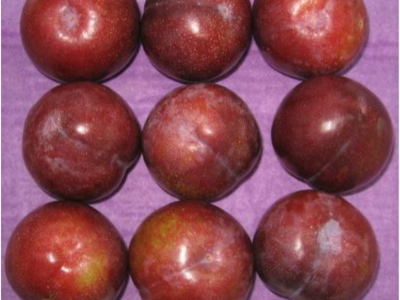
Export of fruit from South Africa to certain countries, such as the USA, requires a mandatory coldsterilisation period of 22 days at -0.55°C or below, to disinfest fruit from phytosanitary pests, such as Mediterranean fruit fly. Since certain plum cultivars require a dual-temperature regime to maintain postharvest quality during cold storage, it is not possible to export such cultivars to markets with strict phytosanitary regulations.

SEARCH CATEGORIES

RELATED ARTICLES


POST-HARVEST DECAY ON STONE FRUIT – PART 1

POST-HARVEST DECAY ON STONE FRUIT – PART 1

Fourie, J., 2013, ‘Post-harvest decay on stone fruit…what, when and how to reduce. Part 1: Understanding the infection process of the decay causing pathogens and factors affecting decay development’, SA Fruit Journal 12(3), 50-54.

read more

FORELLE PEARS: POST-HARVEST MANIPULATIONS TO ENABLE VERSATILE MARKETING

FORELLE PEARS: POST-HARVEST MANIPULATIONS TO ENABLE VERSATILE MARKETING

PUBLICATIONS

FORELLE PEARS: POST-HARVEST MANIPULATIONS TO ENABLE VERSATILE MARKETING

FORELLE PEARS: POST-HARVEST MANIPULATIONS TO ENABLE VERSATILE MARKETING


Crouch, I. & Bergman, H., 2010, ‘Forelle Pears: Post harvest manipulation to enable versatile marketing of good quality fruit’, SA Fruit Journal 9(4), 35-37.


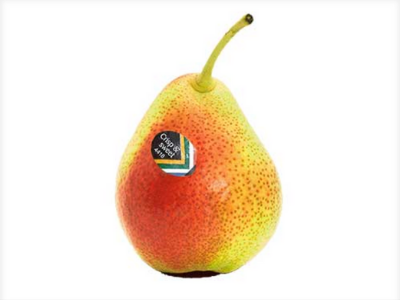
Forelle, an attractive bi-colour pear, has been grown in Germany since 1670. With such a long history of cultivation, one wonders why the harvesting and storage of this cultivar is still so challenging…

SEARCH CATEGORIES

RELATED ARTICLES


POST-HARVEST DECAY ON STONE FRUIT – PART 1

POST-HARVEST DECAY ON STONE FRUIT – PART 1

Fourie, J., 2013, ‘Post-harvest decay on stone fruit…what, when and how to reduce. Part 1: Understanding the infection process of the decay causing pathogens and factors affecting decay development’, SA Fruit Journal 12(3), 50-54.

read more

FORCED-AIR COOLING RECOMMENDATIONS FOR PLUMS

FORCED-AIR COOLING RECOMMENDATIONS FOR PLUMS

PUBLICATIONS

FORCED-AIR COOLING RECOMMENDATIONS FOR PLUMS

FORCED-AIR COOLING RECOMMENDATIONS FOR PLUMS


De Kock, V.A., Khumalo, P. & Davids, J., Jooste, M. 2006, ‘Forced-air cooling’, SA Fruit Journal 5(3), 17.


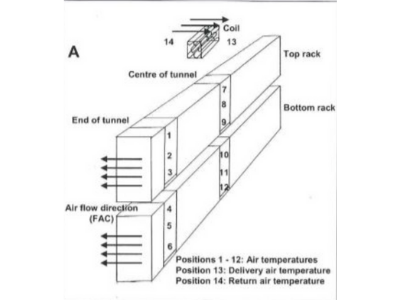
Plums exported from South Africa to overseas markets require effective cold storage management to ensure optimum maintenance of fruit quality. Plums should be placed under cooling within a few hours of harvest, and typically, the fruit is forced-air cooled to -0.5°C. The rate of forced-air cooling (FAC) prior to cold storage has been found to influence the development of internal disorders in some plum cultivars (Jooste and Khumalo, 2004).

SEARCH CATEGORIES

RELATED ARTICLES


POST-HARVEST DECAY ON STONE FRUIT – PART 1

POST-HARVEST DECAY ON STONE FRUIT – PART 1

Fourie, J., 2013, ‘Post-harvest decay on stone fruit…what, when and how to reduce. Part 1: Understanding the infection process of the decay causing pathogens and factors affecting decay development’, SA Fruit Journal 12(3), 50-54.

read more

FLESH FIRMNESS UTILISING A PENETROMETER AS A HARVEST MATURITY PARAMETER FOR APRICOTS

FLESH FIRMNESS UTILISING A PENETROMETER AS A HARVEST MATURITY PARAMETER FOR APRICOTS

PUBLICATIONS

FLESH FIRMNESS UTILISING A PENETROMETER AS A HARVEST MATURITY PARAMETER FOR APRICOTS

FLESH FIRMNESS UTILISING A PENETROMETER AS A HARVEST MATURITY PARAMETER FOR APRICOTS


De Kock, A., 2011, ‘Flesh firmness utilising a Penetrometer with a 6-mm plunger as a harvest maturity parameter for apricots’, SA Fruit Journal, 10(5), 79-81.


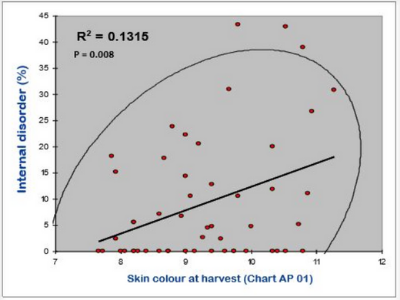
Skin colour and the percentage wring are currently used as parameters for determining optimum harvest maturity of apricots in South Africa. Skin colour is determined using an industry colour chart, and the wring test is performed by cutting the fruit along the suture and twisting the halves in opposite directions to enable visual inspection of the stone. The fruit is regarded as wrung if no flesh adheres to the visible part of the stone. Despite use of these maturity indices, large variations in harvest maturity occur across years, farms and orchards, often resulting in inconsistent apricot quality in the market place.

SEARCH CATEGORIES

RELATED ARTICLES


POST-HARVEST DECAY ON STONE FRUIT – PART 1

POST-HARVEST DECAY ON STONE FRUIT – PART 1

Fourie, J., 2013, ‘Post-harvest decay on stone fruit…what, when and how to reduce. Part 1: Understanding the infection process of the decay causing pathogens and factors affecting decay development’, SA Fruit Journal 12(3), 50-54.

read more

FACTORS AFFECTING GRAPE COOLING

FACTORS AFFECTING GRAPE COOLING

PUBLICATIONS

FACTORS AFFECTING GRAPE COOLING

FACTORS AFFECTING GRAPE COOLING


Moelich, D.H. & Leuvennink, M., 2005, ‘Factors affecting grape cooling’, SA Fruit Journal 3(6), 20-22.


In the fresh produce export industry, fruit temperature is monitored using thermocouples, which are inserted in a standardised position in pallet stacks, for ascertaining the temperature of produce during forced-air cooling (FAC) and the subsequent cold chain.

SEARCH CATEGORIES

RELATED ARTICLES


POST-HARVEST DECAY ON STONE FRUIT – PART 1

POST-HARVEST DECAY ON STONE FRUIT – PART 1

Fourie, J., 2013, ‘Post-harvest decay on stone fruit…what, when and how to reduce. Part 1: Understanding the infection process of the decay causing pathogens and factors affecting decay development’, SA Fruit Journal 12(3), 50-54.

read more